What Is Agentic AI? Practical Benefits for Modern Businesses
 @aaMarfani
AI-generated editorial illustration.
A business rarely struggles because it cannot generate another paragraph. It struggles because information sits in different places, a request needs several follow-ups, or nobody has time to carry a small task through to completion. Agentic AI offers a way to connect some of those steps. Its value depends on the task, the information available and the limits set around its actions.
What makes AI agentic?
An agentic system can pursue a defined goal by selecting steps, using permitted tools and checking the results. A conventional workflow follows a predetermined path; an agent can adapt its next step to what it finds. That distinction is explained in Anthropic’s guide to building effective agents.
Consider the difference between asking for a meeting summary and asking for an internal follow-up brief. The first request may need only text generation. The second might require reading approved notes, finding outstanding decisions, checking a project register and drafting questions for the responsible people. Whether the system should send those questions is a separate permission decision.
Four benefits worth examining
- Less coordination work. A system can assemble information that a person would otherwise collect through several searches and handovers.
- More complete preparation. A repeatable checklist can help ensure that a draft includes the relevant records, open questions and next steps.
- Better handling of variation. When requests differ, the system may choose a suitable sequence instead of forcing every request through the same template.
- More useful human review. A reviewer can spend time on a prepared recommendation with supporting evidence rather than starting with an empty document.
These are potential benefits, not promised results. A badly connected agent can introduce another queue of corrections. The useful question is whether it completes a particular job with less total effort and acceptable quality.
A realistic first example
Imagine a small service business preparing its weekly work review. This is an illustrative scenario, not a customer case study. An agent receives read-only access to approved project notes. It collects overdue tasks, groups them by owner, identifies missing status updates and drafts a short review agenda. A manager checks the agenda before sharing it.
The scope is narrow: prepare the review, do not change deadlines or evaluate employees. If two records disagree, the agent flags the conflict instead of inventing a resolution. The team can judge whether the agenda was useful, how much checking it required and whether important items were missed.
Where autonomy needs boundaries
A generated answer may be plausible but wrong. A tool may fail or return outdated information. Documents may contain instructions that should be treated as untrusted content. Reading a record and changing that record also have very different consequences.
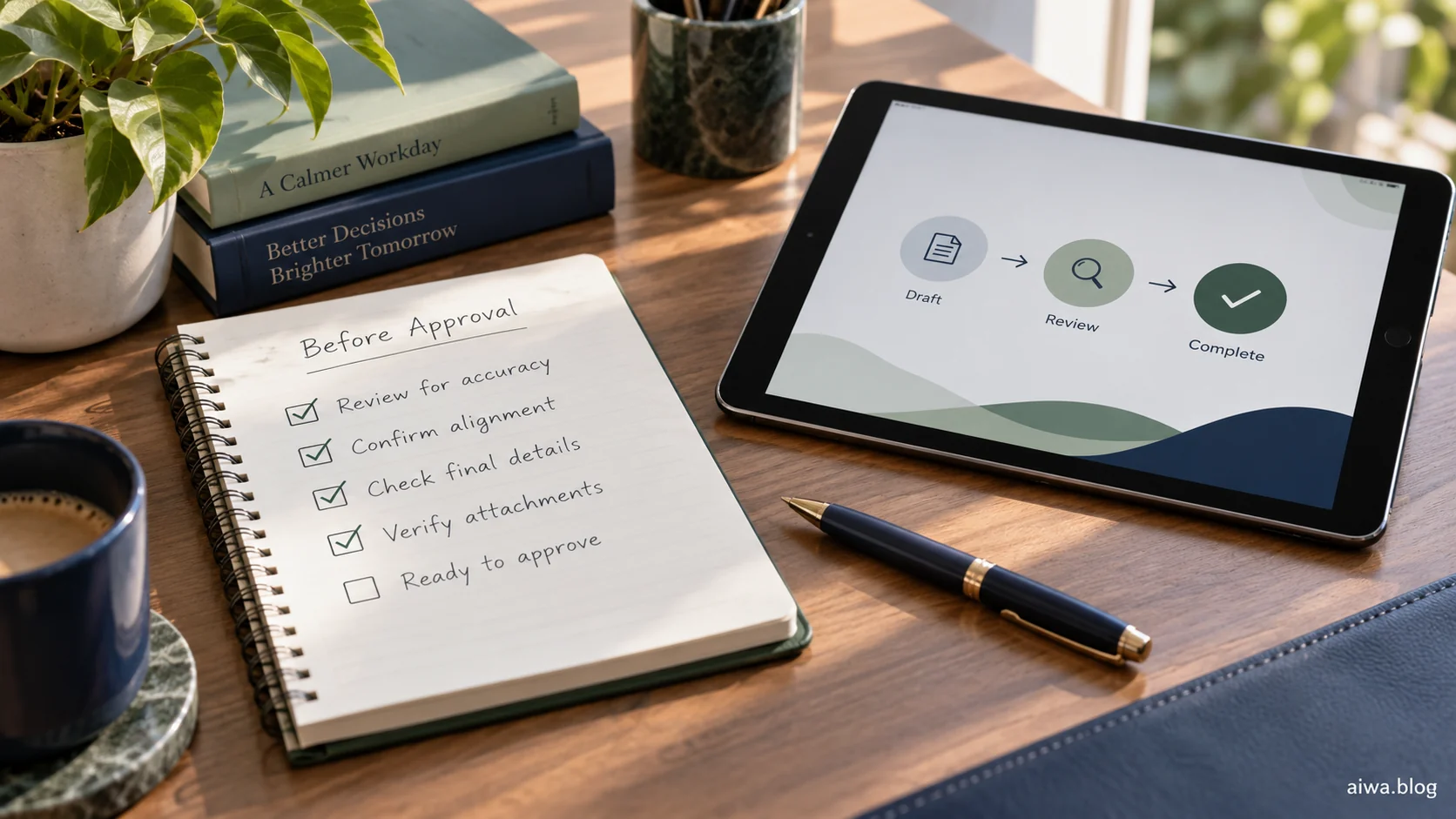
For an initial pilot, keep actions reversible, restrict access to the information needed and require review before external messages or consequential changes. Give the system a stopping rule when required information is missing. Keep a record of inputs, tool actions and the final decision so a person can investigate a mistake.
Conclusion
Write down the desired output, who will review it and what counts as success. If a spreadsheet rule or a fixed workflow already solves the problem, an agent may add unnecessary cost. Use agentic behaviour when changing circumstances require choices across multiple steps, and test it against the simpler alternative.
A sensible starting point is one recurring preparation task with clear inputs and a human owner. Measure the whole process, including correction time. The practical benefit of agentic AI is earned through reliable completion, not through a convincing demonstration.
Explore related topics
Choose one task. Define a useful result.
Start with a small, reviewable experiment and measure quality, effort and exceptions before expanding.
Explore AI & Automation →Keep exploring

Agentic AI for Entrepreneurs: More Time for Strategy, Less Routine Work
How entrepreneurs can use agentic AI to prepare decisions, organise routine work and protect time for strategy without outsourcing accountability.

How Agentic AI Can Help Small Businesses Scale Their Operations
A practical approach to scaling small-business operations with agentic AI, using limited pilots, clear ownership and measurable results.